A Potluck Table That Makes Room for Different Dishes
Plan a potluck table for different dishes with clear descriptions, varied textures and serving space, so regional foods remain distinct and easy to serve.
The common potluck mistake is choosing a theme before asking what people can bring. A table crowded with dishes that all need the oven, the same serving spoon or the same place on the menu makes hosting harder and eating less comfortable. A better plan leaves room for different foods and the traditions behind them.
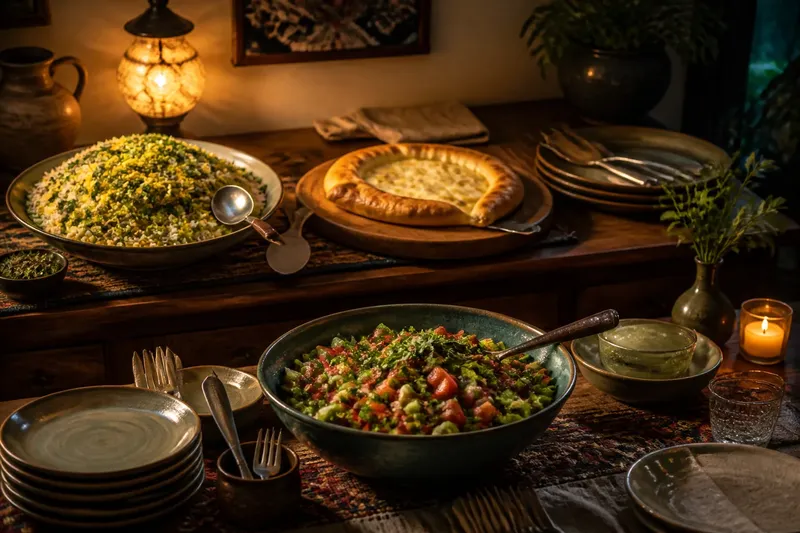
That matters when guests bring dishes from distinct regional food cultures. A pot of Persian rice, Georgian khachapuri and a bowl of Turkish shepherd’s salad need not be made to resemble one another. Each has its own place at the table; the host’s job is to describe, position and serve them clearly.
What should you ask guests to bring?
Start with the practical details: how many people are expected, where the food will be served and what the space can hold. Ask guests what they are considering before suggesting gaps. That makes it easier to spot a table filling with substantial baked dishes while lacking fresh or crisp food, without asking anyone to abandon a dish they care about.
Ask for a short description rather than a formal recipe or cultural explanation. Useful details include the dish’s name, its main ingredients, whether it arrives hot or cold and which utensil it needs. If the cook is comfortable sharing them, note prominent ingredients such as peanuts, sesame, dairy or wheat. Nobody needs to submit a family history with the casserole.
Look at the contributions together, but do not impose quotas. A rich stew and filled pastries might sit well beside a crisp salad or sliced fruit. The point is not to create a single prescribed menu. It is to offer contrasting textures and ways to eat while keeping each dish recognisable on its own terms.
Say you are hosting a gathering where guests have offered Persian rice with herbs, Georgian khachapuri and Turkish shepherd’s salad. You have a dining table and a sideboard, and one guest says the salad should stay cool. First, ask each cook for the dish name, a plain description and serving needs. Then place the rice and bread on the sideboard with separate utensils, and put the salad in a separate, suitable place according to the cook’s storage guidance. The resulting arrangement gives each food room and keeps the salad apart from warm dishes; if the sideboard proves too small, move the bread to a nearby cleared counter rather than crowding the bowls together.
How do you describe regional dishes clearly?
Make place cards before guests arrive, or ask contributors to write one. Keep a traditional dish name when the cook supplies it, then add a plain description. “Khachapuri, Georgian cheese-filled bread” is more useful than “cheesy pastry”; “shepherd’s salad with tomato, cucumber and herbs” gives a guest a clearer idea than “fresh salad”.
Descriptions should help guests decide what to take, not grade the food or flatten its origins. A card might say, “Persian rice with herbs; served warm; use the large spoon.” If the cook cannot confirm an ingredient, do not guess. For serious dietary needs, guests should check directly with the cook rather than rely on a card.
Keep serving notes beside the description: “use the small spoon” or “bread is served alongside”. A dish can be unfamiliar without being mysterious. Clear wording also saves the host from explaining every bowl while searching for the serving tongs.
Where should each dish go?
Choose the serving route before setting out the food. For a counter queue, put plates and cutlery at the start, then arrange dishes so guests can move forwards without reaching back across others. For a seated meal, place shared bowls within easy reach and leave room for glasses and elbows. Do not stack dishes where one must be moved to serve another.
Group foods by how they are served, not by an assumed order of importance. Put bowls beside their spoons, keep bread and accompaniments near the dishes they suit, and set aside a clear place for used utensils. Give each dish its own spoon or tongs; shared tools can muddle flavours and make choices less clear for guests managing dietary restrictions.
Reserve a place for each contribution before it arrives. A dining table, sideboard or cleared counter may work, but a narrow strip beside the sink is a poor home for a large platter. Leave room for lids and serving tools, and choose your own contribution to fit the space left over.
How can you balance texture and temperature?
Consider how food behaves once served. Crisp pastries can soften beside moist dishes; sauce can spill if its bowl is crowded; a delicate flatbread needs space to be lifted without crushing its neighbours. Give crisp or fragile foods their own platter, and keep wet accompaniments in separate bowls so guests can add them as they wish.
Ask contributors whether food arrives hot, chilled or ready to serve at room temperature. Arrange the table so food intended to stay cool is not crowded beside warm dishes, and do not treat the serving table as a safe place to hold food indefinitely. Follow the cook’s storage guidance and local food-safety advice. If safe handling is uncertain, seek advice from a qualified food-safety professional.
Not every dish needs to be treated as part of one composed plate. Guests may want stew with bread, a pastry on its own or something sweet before returning to savoury food. A welcoming table offers choices rather than instructing everyone to build the same combination.
Which small checks prevent a crowded table?
- Check whether each contribution has a name and plain description; if either is missing, ask the cook for it, or leave the card blank until the detail is confirmed.
- Check which utensil each dish needs; if a spoon, tongs or knife is missing, provide the right tool, or ask the contributor to bring one.
- Check whether any dish needs to stay hot or cool; if it does, make a place that follows the cook’s storage guidance, or ask the cook how it should be handled before serving.
- Check whether guests can reach each dish without moving another; if not, rearrange the sequence, or move one contribution to a cleared side surface.
- Check whether bread, sauce or toppings belong beside a particular dish; if the pairing is clear, place them together, or label the accompaniment if guests might mistake its purpose.
- Check whether drinks and used cutlery share the serving space; if they do, move them elsewhere, or clear a separate area before guests arrive.
- Check whether a dish card claims an ingredient detail the cook has not confirmed; if so, remove that claim, or direct guests to ask the cook.
Matching tableware, coordinated colours and a shared naming scheme are not worth the effort if guests can already identify the food and reach it comfortably. A plain card and a spare spoon are generally more useful than a theme that requires everyone to bring the same sort of dish.
What should you ask before the meal begins?
Should guests bring dishes from the same cuisine?
No. Ask for a description and serving needs, then look for a comfortable mix of textures and ways to eat. Distinct regional foods can share a table without being presented as parts of one tradition.
What information belongs on a dish card?
Use the dish’s name, a brief description, notable ingredients the cook can confirm and any useful serving note. If an ingredient is uncertain, leave it off and invite guests to ask the cook directly.
How do you handle a dish that needs to stay hot or cold?
Ask the contributor what the dish requires and plan its place before it arrives. Follow appropriate storage and food-safety guidance rather than relying on the serving table to maintain a safe temperature.
What if two guests bring similar foods?
Keep both if they suit the gathering, and arrange them with enough room for guests to choose. If space is tight, ask the contributors whether one can be served in a smaller bowl or brought out later.
How should you arrange the table as food arrives?
Confirm each dish’s name, description and serving tool with its contributor. Put it in the reserved place, add its card and keep any accompanying sauce or bread nearby. If a dish needs more room than expected, move another item instead of squeezing the whole arrangement tighter.
Before guests gather, look at the table from their point of view. Can they identify each dish, reach the serving tools and step away without blocking the next person? Is there room for a plate, and is it clear which sauce belongs with which food? Adjust the layout while the serving area is still empty.
A potluck table can hold foods with different regional histories without giving them a false shared identity. For a potluck table with different dishes, the useful standard is simple: guests should be able to recognise each contribution, understand how to serve it and choose what they want without crowding. Keep the dish names, give each food its own space and leave room for the person holding the plate.