Fresh, Dried or Frozen Herbs in Eastern Regional Cooking
Fresh, dried or frozen herbs suit different jobs in eastern regional cooking; choose the right form for a bright garnish, a slow broth or a savoury filling.
The common mistake with fresh, dried or frozen herbs is treating them as interchangeable. In eastern regional cooking, that can blur the contrast between a fragrant handful of fresh greens and the settled aroma of herbs simmered into a broth. The useful choice depends on the dish’s tradition and the work the herb is meant to do.
Why does the herb’s role matter?
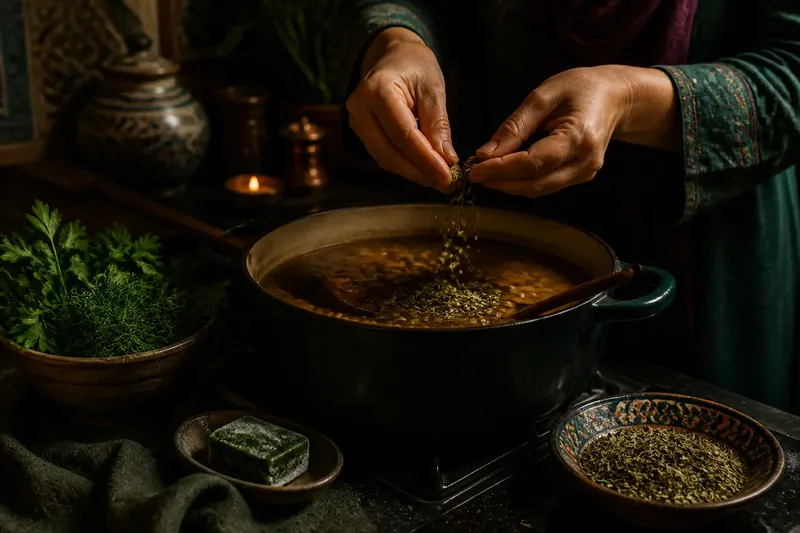
Across eastern food cultures, herbs can be central to a dish rather than an ornamental finish. A bowl of Persian-style ash, for instance, may rely on a generous fresh-herb presence, while dried mint can bring a deeper, warmer aroma to a cooked bean or lentil dish. The same plant in another form does not produce the same texture or flavour.
First decide whether the herb should brighten the finished dish, mingle with a long-cooked liquid, or add green flecks to a filling. Then choose its form. Fresh leaves tend to suit a visible, lively finish; dried leaves suit moist cooking; frozen chopped herbs are useful when a cooked dish needs a green note without the texture of a fresh bunch.
When do fresh herbs suit the dish?
Fresh parsley, coriander leaf, dill, mint and spring onion work well when their colour, fragrance or leaf texture should remain noticeable. In Persian kuku sabzi, a herb-rich omelette, chopped fresh herbs are part of the mixture, not a garnish that can be swapped out without changing the dish. In many eastern regional kitchens, fresh herbs also accompany bread, cheese or cooked food at the table.
Use a sharp knife and cut delicate leaves shortly before cooking or serving. Tender leaves lose some fragrance under prolonged heat, while sturdy stems can be chopped finely into soups and fillings. Fresh is not automatically the better choice: limp leaves or a large bunch bought for a single pinch can be more nuisance than contribution.
What does dried mint or another dried herb do?
Drying removes water and leaves a concentrated flavour suited to long-cooked dishes. Dried mint is used in several eastern regional traditions, including in cooked lentils and yoghurt-based dishes; dried thyme or oregano can also suit stews and sauces where their aroma has time to soften into the liquid or fat.
Rub coarse dried leaves between your fingers before adding them, then give them time in the moist dish. They can taste dusty or sharp if left in large fragments on the surface of a finished meal. Dried herbs are not a good substitute for a mound of fresh greens in kuku sabzi or a chopped herb salad: the flavour may be present, but the volume and leafy texture are not.
Where do frozen herbs fit?
Frozen chopped herbs can provide a greener flavour than dried leaves in soups, sauces, cooked fillings and stews. Thawing softens their texture and can release water, so they are less suited to a crisp-looking garnish. Check the packet for added oil, salt or other ingredients, since those can alter the seasoning.
Say you are making a small pot of lentil soup and have plain frozen chopped coriander, but no fresh bunch. Add a modest spoonful near the end, stir, and taste: the expected result is a recognisable green aroma with soft flecks. If you want crisp leaves visible on top, the frozen herbs will not provide that, so leave the garnish off or choose fresh herbs instead.
How should you choose and time herbs?
Use the following checks to match the form to the dish. Each result points to a practical choice rather than a rigid conversion rule.
- Check the role: If the herb should provide a fresh, visible finish, use fresh leaves; if not, consider a cooked-in form such as dried or frozen herbs.
- Check the cooking time: If a broth or stew will simmer, add dried herbs early enough to soften; if the dish cooks briefly, choose fresh herbs near the end or frozen herbs stirred in late.
- Check the texture: If the recipe depends on abundant leafy volume, use fresh herbs; if soft green flecks are acceptable, frozen herbs can work; otherwise choose another form.
- Check the liquid: If the dish is wet, dried leaves can mingle through it; if it is relatively dry and leaves might remain conspicuous, crush them finely or choose fresh or frozen herbs.
- Check the frozen packet: If it contains plain chopped herbs, add them directly to a cooked dish; if it contains oil, salt or other ingredients, account for those before seasoning.
- Check the fresh bunch: If the leaves are fragrant and usable across several dishes, buy the bunch; if they are limp or only a pinch is needed, use an appropriate dried or frozen alternative.
Imagine a cook with a lentil stew that will simmer, a small packet of dried mint and a frozen cube of parsley. The cook wants mint in the broth and a green note at the end, but not a fresh garnish. They rub the mint between their fingers and add it early, so it has time to soften into the liquid; near serving, they stir in the parsley cube and allow for the water it releases. The resulting trade-off is clear: the mint seasons the stew deeply, while the parsley adds a softer green note without crisp leaves. If the cook instead wanted visible fresh leaves, neither form would meet that aim.
Which herb-form questions come up most often?
Can dried herbs replace fresh herbs?
They can season a cooked dish, but they do not reproduce the volume or texture of fresh leaves. Add them cautiously and taste as the dish cooks, especially if the recipe depends on abundant greens.
Can frozen herbs be used as a garnish?
They can add flavour on top, but thawed leaves are soft and may look wet. Choose fresh leaves when a crisp, defined finish matters.
Should frozen herbs be thawed first?
Small chopped portions can usually go straight into a hot dish. Break apart any clump and allow for water released as the herbs warm.
Are fresh herbs always more flavourful?
No. Fresh herbs offer a bright, leafy character; dried herbs can give a concentrated aroma suited to slow cooking. The better form depends on the dish and the role it needs to fill.
What is not worth the effort?
An elaborate conversion rule for every herb is not worth maintaining. Strength varies with the herb, its storage and how it has been cut, so a fixed ratio can imply a precision the ingredients do not offer. Start modestly, taste and adjust where the recipe allows.
Nor does every bowl need a fresh garnish. In eastern regional cooking, herbs may already have done their work in the broth, filling or herb-rich mixture. For fresh, dried or frozen herbs, choose the form that suits the dish’s tradition and texture; the garnish can remain optional.