Why Toasting Spices Changes Their Aroma
Why toasting spices changes their aroma, how to judge readiness by scent and sound, and when to stop before bitterness takes over a regional dish.
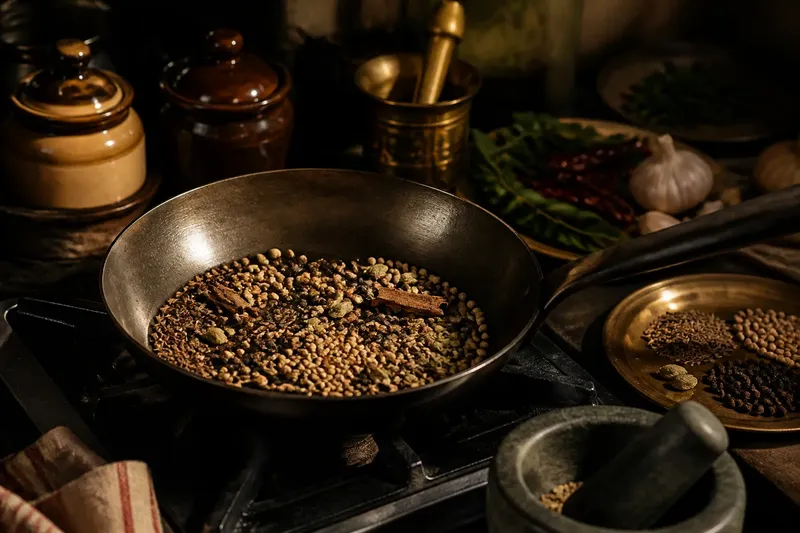
The common mistake with toasting spices is waiting for a dramatic change of colour. By then, small seeds may have turned bitter, and a dal meant to taste warm and fragrant can acquire a scorched edge. Why toasting spices changes their aroma is easier to understand through the smell and timing of a particular dish than through a target shade of brown.
What does dry heat do to a spice?
Whole spices contain aromatic compounds that become easier to smell as they warm. Heat shifts which notes stand out: a spice may seem fuller, warmer or more pronounced. The pan is not creating flavour from nothing, and toasting does not improve every spice for every dish.
Dry heat also drives off some moisture and can make seeds, pods and bark easier to crush. That matters in regional cooking, where the method depends on the dish. In Bengali cuisine, for instance, panch phoron is commonly used as a whole-spice mixture in hot oil, where the seeds sizzle and release their aroma into the fat. Dry-toasting cumin or coriander for a ground finish is a different operation. Treating the two as interchangeable can leave a dish with the wrong texture or an aroma that arrives at the wrong point.
Dry-toasting uses no added fat. Blooming spices in oil or ghee lets fat carry aromatic compounds into the food. Some recipes use both methods for different portions of the same spice; others call for only one. Follow the sequence the dish needs rather than adding a dry-pan stage by habit.
Why is colour a poor stopping rule?
Colour is a lagging, unreliable clue. Pale seeds can smell ready before they darken, while some spices change shade only slightly. Pan material, heat level, seed size and the amount in the pan all affect what the eye sees. Chasing brownness is an efficient way to overdo a small seed.
Smell is usually more informative. Keep the pan moving gently and notice when the aroma becomes clearer and more distinct, rather than harsh or smoky. Sound can help too: seeds may rustle, click or pop, depending on their kind. Silence does not mean failure, and popping is not a universal signal.
Use cues together: a more pronounced scent, a subtle change in texture and, where it occurs, a change in sound. If the smell turns acrid or the spice smokes, stop. Transfer the spices promptly to a cool plate; the pan’s retained heat can continue cooking them after it leaves the hob.
How should you toast different whole spices?
Start with a clean, dry frying pan and a modest amount of one spice at a time. A heavy-based pan spreads heat steadily; a small stainless-steel or cast-iron pan makes it easier to keep the spices in view. Use low to medium heat rather than trying to hurry the process.
Shake or stir the spices so they move across the pan instead of sitting in a hot patch. Small seeds such as cumin and mustard need close attention because their size makes a quick change easy to miss. Larger coriander seeds, peppercorns and pieces of cinnamon bark may respond more slowly, but they still need movement and observation.
Different shapes and varieties give different cues. Cardamom pods may release a resinous, sweet scent; fennel can become more rounded; coriander seeds may smell citrusy or gently nutty. These are possibilities to notice, not promises that every batch will smell identical. Age, storage and variety all affect the aroma.
If a recipe calls for crushing toasted spices, let them cool first. Use a mortar and pestle or a spice grinder reserved for dry ingredients. Grinding exposes more surface to air, so grind what the dish needs rather than preparing a large jar in advance.
When is dry-toasting the wrong choice?
Not every spice benefits from a dry pan. If a recipe calls for whole spices to sizzle in oil or ghee, follow that method: the fat distributes their aroma through the dish. Dry-toasting them first may alter their texture and make the later cooking harder to judge.
Ground spices are easy to scorch because their fine particles heat quickly. If the recipe calls for ground turmeric, chilli or cumin to go into hot fat, follow that sequence. Ingredients such as paprika can turn bitter when overheated, so sustained dry heat is rarely a useful substitute for the recipe’s gentler method.
There is little to gain from toasting a spice meant to taste fresh and bright, or from adding a pan stage simply because it sounds careful. If the recipe already warms whole spices in fat or liquid, extra toasting may make their flavour too assertive. The useful question is whether the dish asks for a raw, toasted or fat-bloomed aroma.
What should you check before deciding to continue?
When a batch seems uncertain, use the observations below to choose a next move. A smell is more useful than a shade of brown, though neither requires a solemn committee.
- Check whether the pan is dry and clean. If it is, continue with dry-toasting; if it contains oil or residue, clean and dry it first so the spices do not fry or pick up burnt flavour.
- Check whether the recipe calls for whole spices in hot fat. If it does, bloom them in oil or ghee as directed; if it calls for a toasted powder, dry-toast the relevant portion separately.
- Check whether the batch contains seeds and much larger pods together. If it does, toast them separately and combine them afterwards; if their size and shape are similar, keep them together while stirring.
- Check whether the scent is growing clearer and pleasant. If it is, keep moving the spices and watch closely; if it has not changed, lower the heat and give them more time rather than chasing a colour.
- Check whether the aroma has become acrid or smoky. If it has, remove the pan from the heat and discard scorched spices; if only a few pieces are affected, sort them out only when the remaining spices smell clean.
- Check whether the spices are still warm before grinding. If they are, let them cool on a plate; if they are cool, grind the amount the dish needs and add it at the recipe’s specified point.
Can you toast mixed spices together?
Usually, separate spices whose sizes or shapes differ. Small seeds may be ready while a large pod is still warming, and a shared pan makes that harder to manage. Combine them after toasting if the recipe calls for a blend.
Should the pan be hot before the spices go in?
A gently warming pan gives you more time to notice changes. A very hot pan can take spices from faintly fragrant to scorched before you have a useful chance to respond. Keep the heat moderate and lower it if the aroma develops abruptly.
Can you rescue spices that smell burnt?
Removing a spice from the pan stops further cooking but does not reverse a burnt flavour. If only a few pieces have scorched, sort them out and smell the rest; if the remaining batch smells acrid too, start again with fresh spices.
Does toasting make spices last longer?
No. Toasting is a cooking step, not a preservation method. Cool spices before storing them in a clean, airtight container away from heat and damp; for the brightest aroma, prepare only what you expect to use soon.
How does this work in a pot of dal?
Say you are making dal and have cumin for both the tempering and a finishing powder. You set aside the portion intended for the powder, put it in a dry pan over moderate heat and keep the seeds moving. When their scent becomes clearly warm and earthy, you tip them onto a cool plate. Once they have cooled, you grind that portion and add it at the end; the remaining cumin goes into the hot fat for the tempering. The expected result is a distinct toasted note alongside the tempering’s aroma, without asking one portion to do two jobs.
How can aroma become a useful cue?
Keep the cooking area calm enough to notice what is happening. Have a cool plate ready before you begin, and use a spoon or pan movement to keep the spices travelling. If the kitchen is smoky, open a window rather than leaning over the pan for a closer inspection.
For a repeatable habit, note the spice, the pan and the point at which its scent changes in a way you like. That is a kitchen note, not a universal rule: another pan or a fresher packet may behave differently. Why toasting spices changes their aroma becomes clearest when you notice the transition, then stop while the scent remains clean.
As soon as the spices are ready, move them away from the hot pan. A plate, bowl or cool saucer will do. Leaving them in the pan while you prepare the next ingredient is a small delay with a predictable consequence: more cooking than you intended.